How to Become a Certified Midwife in India: Courses, Eligibility & Career Path
How to Become a Certified Midwife in India is now a clear, regulated pathway via the Indian Nursing Council’s post-basic programs: NPM (Nurse Practitioner in Midwifery) and NPME (Nurse Practitioner in Midwifery Educator). This guide explains the 18-month programmes, eligibility, syllabus highlights, career progression in government and private sectors, and practical tips to apply successfully.
Compact, clinician-informed, and ready for use in applications, CVs or training proposals — read on for the official steps, deployment options and realistic salary expectations (2025 estimates).
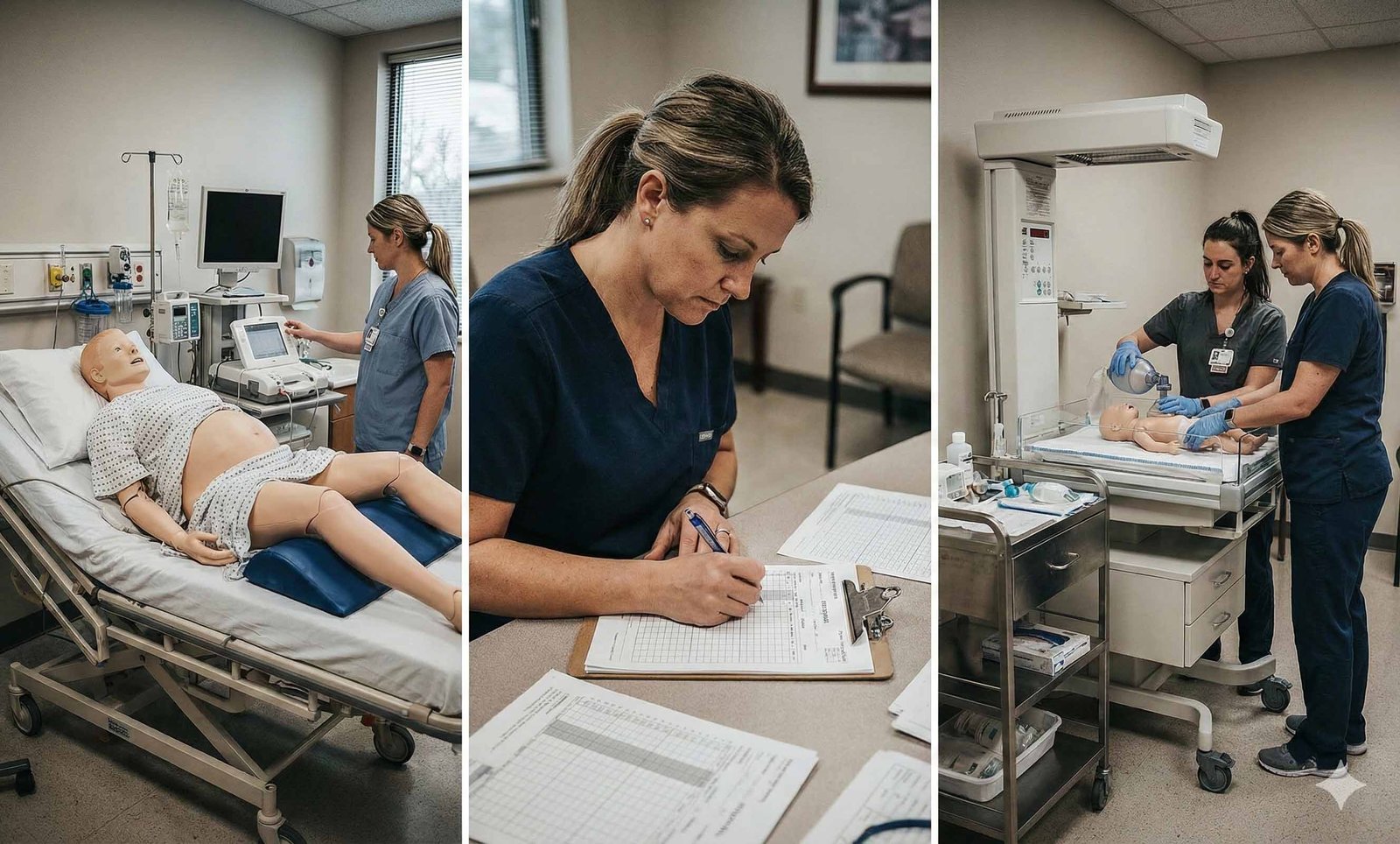
Why midwifery training matters in India
Professional midwives trained through NPM and NPME deliver woman-centred, evidence-based care. They reduce unnecessary interventions, expand skilled birth attendance, and support respectful maternity care—especially in rural and underserved areas.
- INC-recognised curriculum aligned with WHO/ICM competencies.
- Deployment in Midwifery-Led Care Units (MLCUs), PHCs and district hospitals.
- NPME creates local educators to scale quality training through SMTIs.

Official Courses — NPM & NPME (18 months)
Nurse Practitioner in Midwifery (NPM)
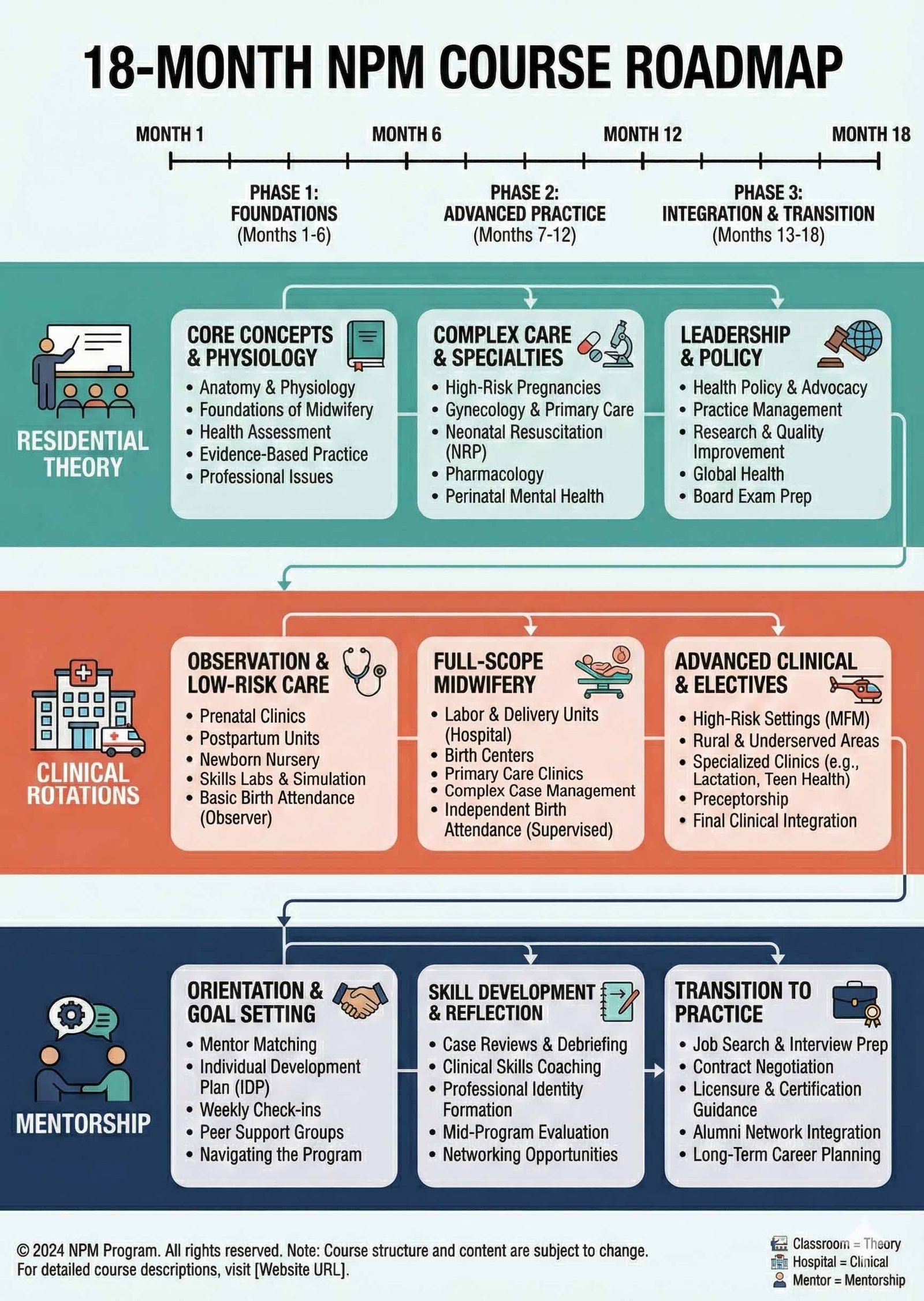
The NPM is the recognised post-basic midwifery qualification in India. Typically structured as an 18-month program, it combines a residential theory & simulation module (commonly 4–6 months) with an extended supervised clinical mentorship (remaining months). Training prepares nurses to provide antenatal, intrapartum, postpartum and newborn care and to stabilise emergencies pending referral.
Nurse Practitioner in Midwifery Educator (NPME)
NPME (usually 18 months) prepares experienced midwives to teach, supervise and manage training programs. Graduates become trainers at State Midwifery Training Institutes (SMTIs), lead simulation labs and ensure competency-based assessment.
Eligibility Criteria
Who can apply for NPM?
- Registered Nurse (RN) & Registered Midwife (RM) with State Nursing Council registration.
- B.Sc Nursing or GNM graduates — usually with ≥2 years clinical experience (maternity experience preferred).
- Selection often includes a written exam, OSCE and interview.
Who can apply for NPME?
- RN & RM with M.Sc Nursing (OBG/Community/Pediatrics) OR B.Sc/NPM plus experience per state norms.
- Experience in clinical training or ≥2 years midwifery practice is desirable.
Curriculum & Competencies (What you learn)
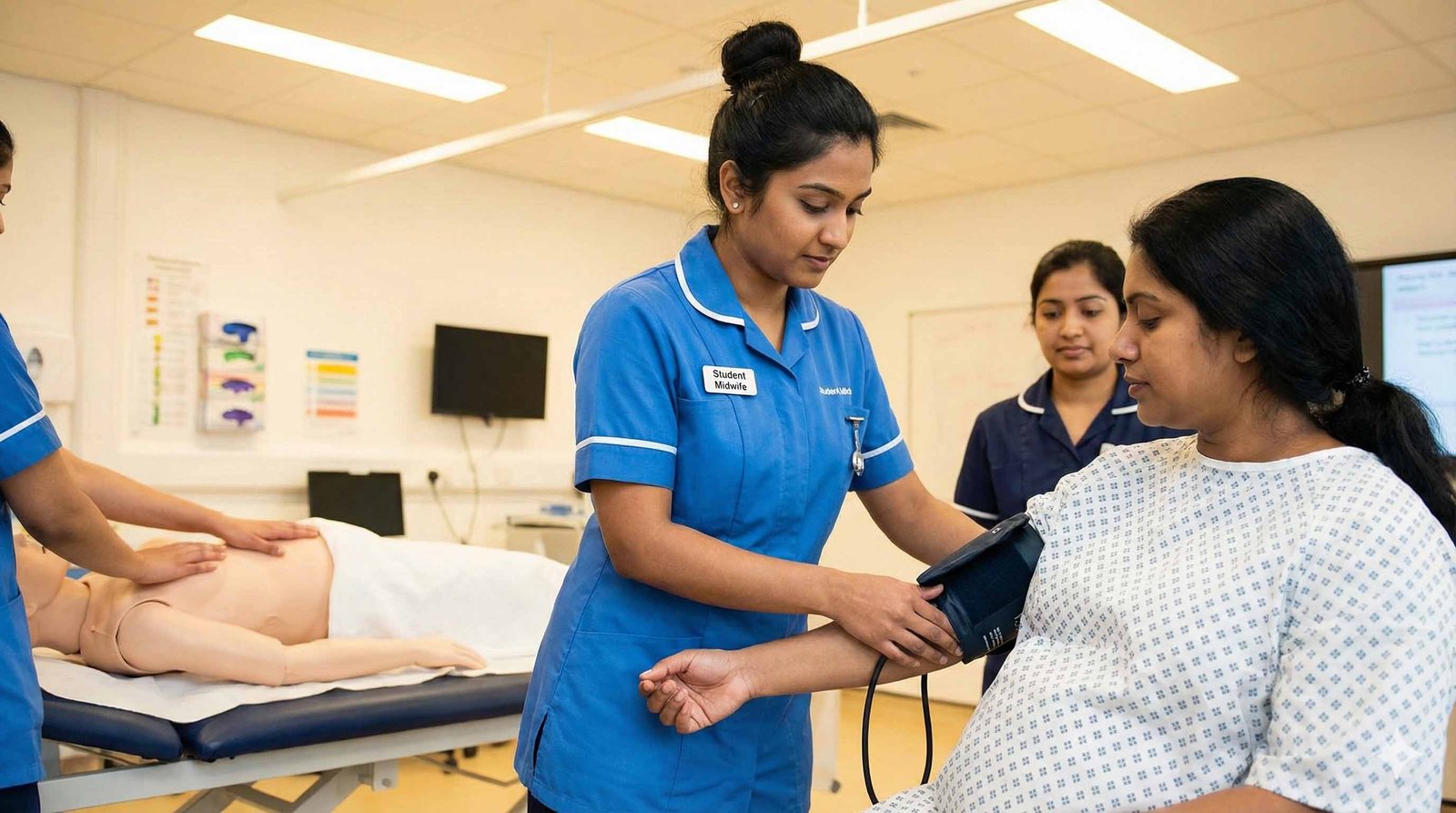
The 18-month curriculum mixes classroom learning, simulation, clinical rotations and competency-based mentorship. It follows ICM/WHO competencies adapted to India.
Theoretical modules
- Foundations of midwifery & woman-centred care
- Antenatal care, fetal monitoring & risk assessment
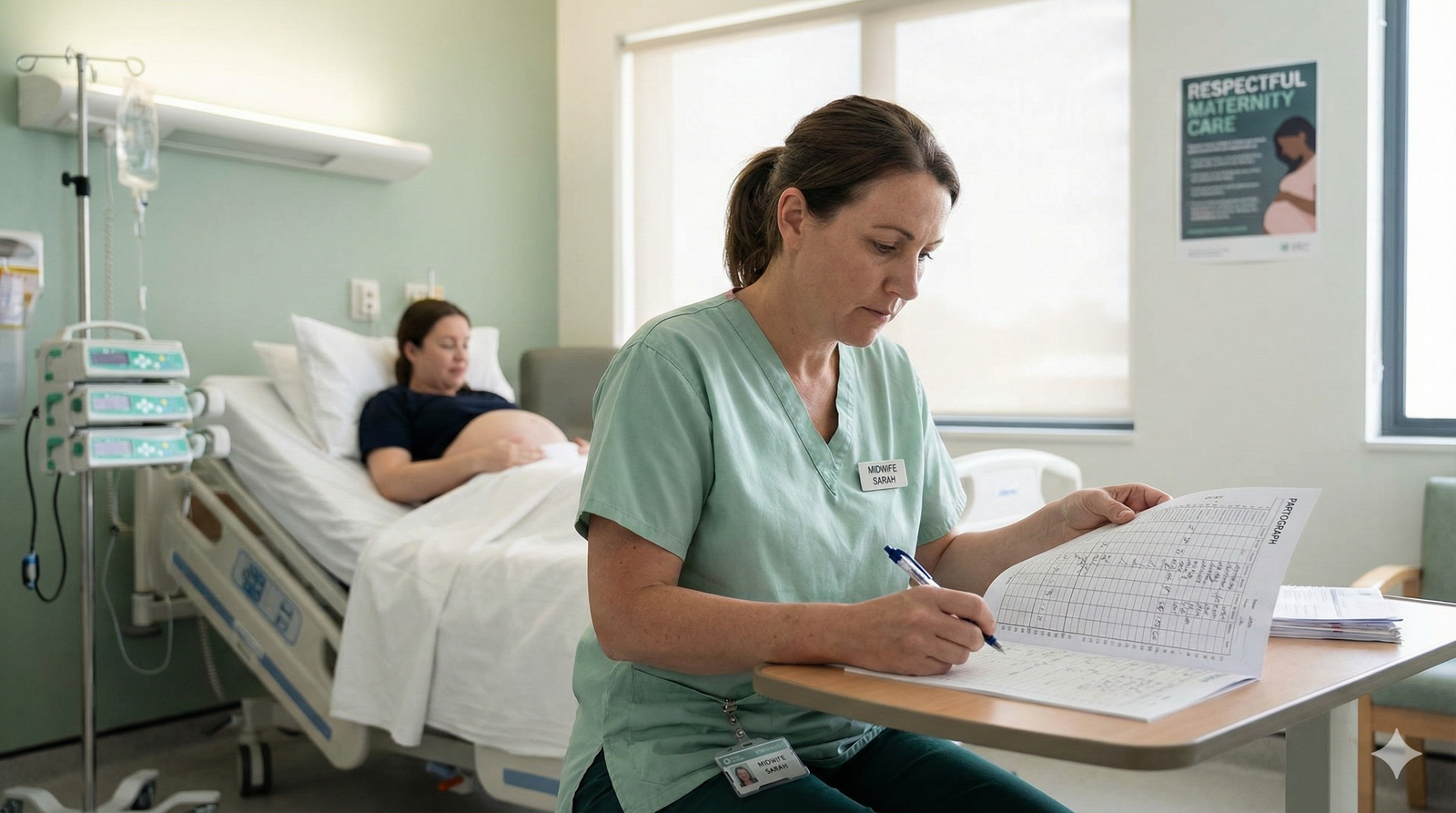
- Normal labour, partograph use & birth positions
- Postpartum care, lactation support & newborn assessment
- Pharmacology, infection control, ethics & medico-legal aspects
Clinical skills & emergency management
- Conduct normal vaginal deliveries independently
- Neonatal resuscitation and essential newborn care
- BEmONC stabilisation — manage PPH, eclampsia, sepsis until referral
- Documentation, counselling and community outreach
NPME add-ons
NPME focuses on pedagogy, facilitation of simulation, competency assessment, curriculum planning and clinical mentorship — skills essential to run SMTIs and large training cohorts.
Month-by-Month Training Milestones
Typical course progression (example):
- Months 1–3: Core theory, simulation labs, basic labour management and OSCE prep.
- Months 4–6: Intensive supervised clinical rotations in labour rooms, ANC & NNU.
- Months 7–18: Clinical mentorship, independent practice under supervision in MLCUs, competency assessments and logbook completion.
Upon completion, NPM graduates should provide independent care for normal births and appropriately stabilise and refer complications.
Deployment: Where NPMs & NPMEs work
- Midwifery-Led Care Units (MLCUs) in district/sub-district hospitals
- Community Health Centres (CHCs), Primary Health Centres (PHCs)
- Private birthing centres, maternity homes and NGOs
- State Midwifery Training Institutes (SMTIs) and national training centers (NPME roles)
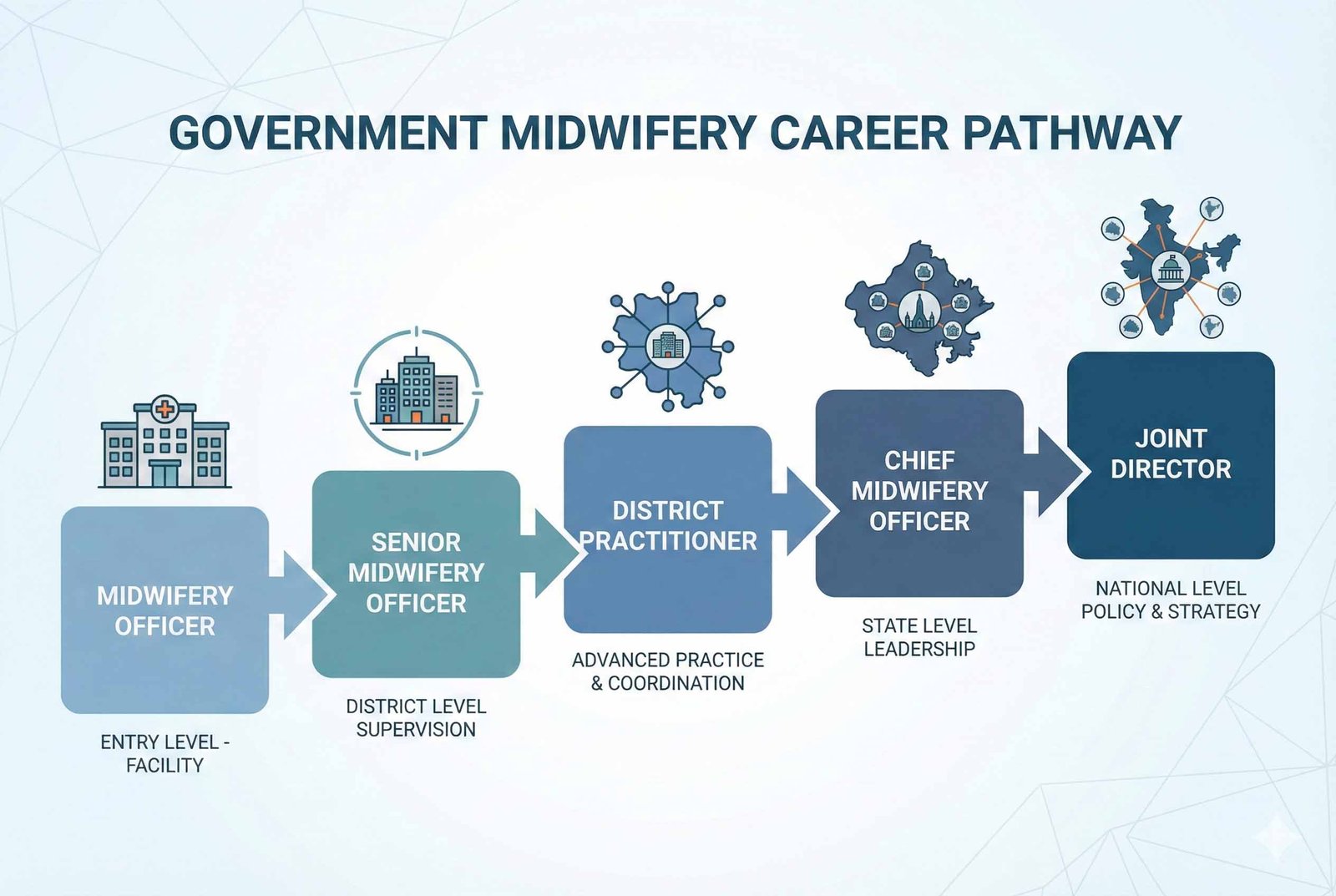
Career Progression Pathway (Government sector)
Entry: B.Sc Nursing / GNM + ~2 years clinical experience → NPM training.
- NPM → Midwifery Officer (facility level)
- Senior Midwifery Officer → District Midwifery Practitioner / Assistant Director
- State Level → Chief Midwifery Officer / Midwifery Consultant / Deputy Director
- Apex Level → Joint Director – Midwifery
- Parallel: NPME → Assistant Professor / Midwifery Educator / Senior Trainer
This ladder allows movement into leadership, policy, education and international roles for experienced midwives.
Salary & Professional Growth (2025 estimates)
- Government sector: ₹45,000 – ₹85,000 per month (varies by state/grade)
- Private hospitals & birthing centres: ₹30,000 – ₹75,000 per month
- International placements: higher; dependent on country recognition
Experienced midwives can specialise in leadership, research, public health, or international maternal-newborn programs.
Practical Tips for Applicants
- Maintain current RN & RM registrations before applying.
- Gain hands-on maternity experience — labour room exposure is invaluable.
- Prepare for OSCEs by practising simulation scenarios and partograph usage.
- Keep documented supervised birth logs and neonatal skill records.
- Seek mentorship from senior midwives or NPME trainers.
When Midwives Must Escalate or Refer
- Uncontrolled postpartum haemorrhage not responding to first-line measures.
- Maternal seizures (eclampsia) requiring advanced management.
- Fetal distress, cord prolapse or signs of obstructed labour needing obstetric intervention.
NPMs are trained to stabilise and promptly communicate with obstetric teams for definitive care—timely referral saves lives.
Frequently Asked Questions
Q1: What is the NPM course in India?
A1: The NPM (Nurse Practitioner in Midwifery) is an 18-month post-basic midwifery training program that equips registered nurses to practise as certified midwives in India.
Q2: How long does it take to become an NPM?
A2: Typically 18 months — combining a residential theory/simulation module and extended clinical mentorship in designated facilities.
Q3: What is the difference between NPM and NPME?
A3: NPM trains clinicians to be practising midwives; NPME trains educators and supervisors who teach and scale midwifery training.
Q4: Where will certified midwives work after training?
A4: NPM graduates are deployed to MLCUs, district/sub-district hospitals, PHCs/CHCs, private birthing centres and NGOs. NPME graduates work in training institutes and state programs.
Q5: Is midwifery a promising career in India?
A5: Yes — it offers stable government jobs, leadership pathways, academic roles, and international opportunities for trained midwives.
Join midwifery resources
Sign up for printable checklists, OSCE practice scenarios and mentor directories to help you complete the NPM/NPME pathway.
- OSCE & simulation checklists
- Clinical logbook templates

Conclusion
Becoming a certified midwife in India is now an achievable, regulated path via the NPM and NPME programs. These 18-month courses, aligned with global standards, prepare practitioners to provide respectful, evidence-based maternal and newborn care across India's public and private systems.
Keep clinical logs, seek mentors early, and consider NPME if you plan to teach and scale midwifery training. Midwifery offers meaningful clinical work, leadership options and a direct impact on maternal-newborn outcomes.