Anemia During Pregnancy: How Ferric Carboxymaltose (FCM) is Transforming Maternal Health

Anemia During Pregnancy: How Ferric Carboxymaltose (FCM) is Transforming Maternal Health
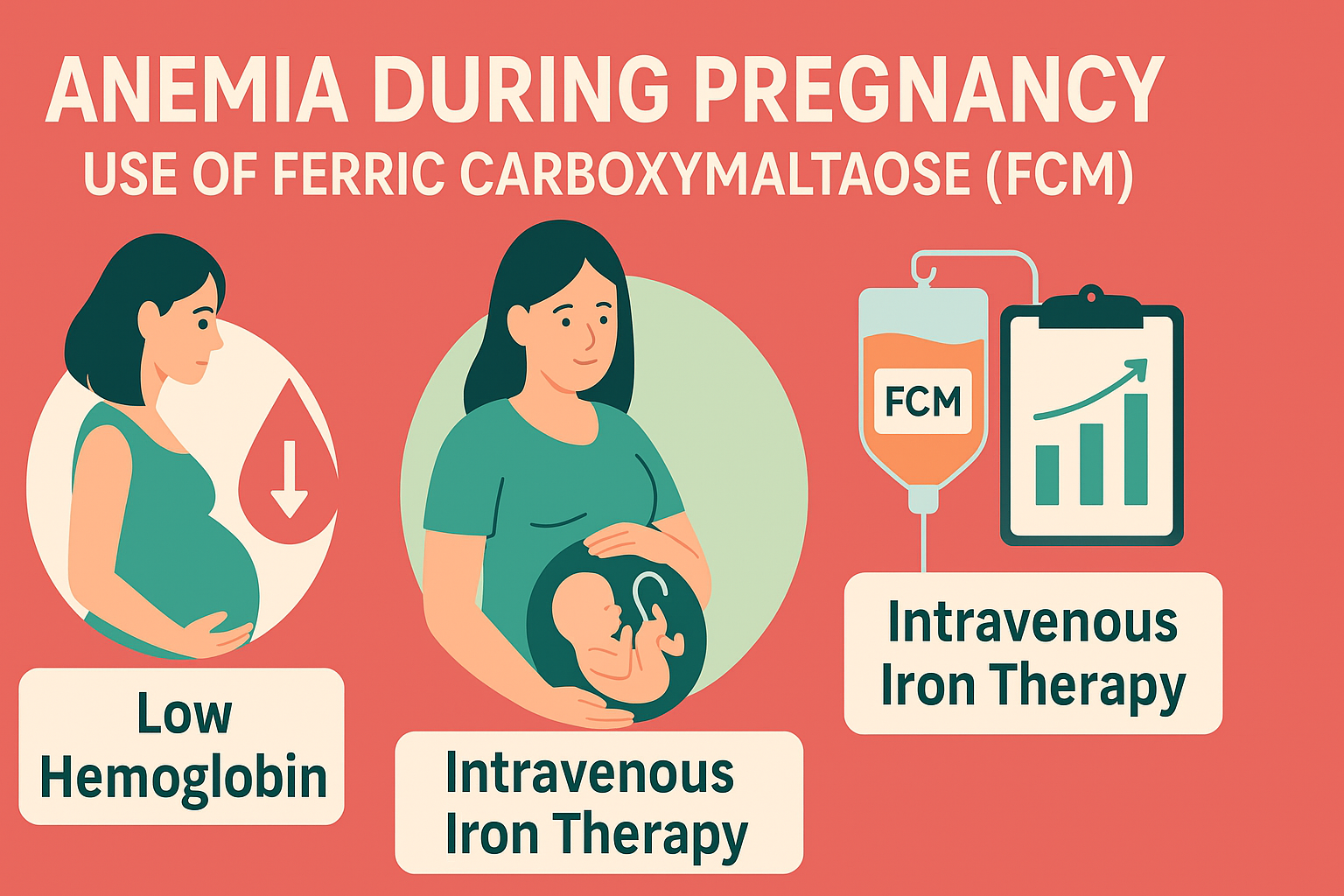
Anemia during pregnancy is one of the most common yet overlooked health concerns among women worldwide. Affecting nearly 37% of pregnant women, it can lead to serious complications if not addressed in time. When hemoglobin levels fall, oxygen supply to the mother and fetus decreases, affecting both maternal well-being and fetal growth.
Recent advancements such as Ferric Carboxymaltose (FCM) — a modern parenteral iron therapy — have brought new hope for safe, quick, and effective anemia correction during pregnancy. Let’s understand why anemia is so critical and how FCM is making a difference.

Understanding Anemia in Pregnancy
Anemia is defined as a hemoglobin (Hb) level below 11 g/dL in pregnant women. It results from insufficient iron to produce healthy red blood cells, which carry oxygen throughout the body. The causes of anemia in pregnancy are multifactorial:
- Nutritional deficiencies: Lack of iron, folic acid, vitamin B12, and copper.
- Hemolytic conditions: Thalassemia, sickle cell anemia, or malaria.
- Blood loss: Hemorrhoids, parasitic infestations, antepartum hemorrhage.
- Chronic diseases: Tuberculosis, renal failure, and HIV infection.
Pregnancy itself increases the body’s iron requirement. Without supplementation or balanced nutrition, women are prone to develop iron deficiency anemia (IDA), the most common type seen in pregnancy.

Consequences of Anemia During Pregnancy
Untreated anemia can have serious effects on both the mother and baby.
- Maternal complications: Preeclampsia, prolonged labor, postpartum hemorrhage (PPH), and fatigue.
- Fetal complications: Low birth weight, preterm birth, neonatal anemia, and poor cognitive development.
According to global studies, the risk of maternal death is 2.36 times higher in women with severe anemia than in those without.
How Anemia is Diagnosed
Diagnosis is based on clinical signs and hemoglobin estimation. Symptoms include fatigue, dizziness, shortness of breath, cold extremities, and leg cramps. Visible signs include pale skin, brittle nails, and an inflamed tongue.
Health workers use digital hemoglobinometers for quick screening — a drop of blood gives results in under a minute, making it ideal for field-level screening during ANC (Antenatal Care) visits.
Classification of Anemia in Pregnancy
| Severity | Hemoglobin (g/dL) |
|---|---|
| Normal | ≥ 11 |
| Mild | 10–10.9 |
| Moderate | 7–9.9 |
| Severe | < 7 |
Why Oral Iron Often Fails
Despite wide distribution of iron-folic acid (IFA) tablets, many women do not achieve optimal hemoglobin improvement due to:
- Gastrointestinal side effects like nausea, constipation, and indigestion.
- Forgetfulness or poor adherence.
- Lack of counselling and misconceptions.
- Socio-cultural barriers limiting compliance.
This is where Parenteral Iron Therapy—iron administered intravenously—provides a better alternative.

Parenteral Iron Therapy: The Modern Approach
Intravenous (IV) iron therapy ensures rapid correction of anemia by replenishing iron stores directly into the bloodstream. It avoids gastrointestinal irritation and offers predictable absorption.
Among IV preparations, Ferric Carboxymaltose (FCM) has shown the best outcomes in safety, speed, and patient comfort.
Why Ferric Carboxymaltose (FCM) is Preferred
- Higher stability and lower allergic potential.
- Shorter infusion time: 15 minutes vs. 30 for Iron Sucrose.
- Higher single-dose capacity: Up to 1000 mg per session.
- Faster hemoglobin improvement and fewer visits needed.
When to Use FCM in Pregnancy
- Moderate anemia after 1st trimester with poor response to oral iron.
- Severe anemia (Hb 5–6.9 g/dL) between 13–34 weeks of gestation.
- Moderate anemia after 32 weeks due to iron deficiency.
Contraindications: Iron overload, liver disorders, hypersensitivity to iron, non-iron deficiency anemia, or hemolytic disorders.
FCM Dosage and Administration
Administer intravenously, diluted in 100 ml of 0.9% normal saline, over 15 minutes under medical supervision. The maximum dose per session is 1000 mg, not exceeding 1500 mg in one pregnancy.
Ganzoni’s Formula: Total Iron Deficit (mg) = Body Weight (kg) × (Target Hb – Actual Hb) × 2.4 + 500
Check hemoglobin after 4 weeks. If Hb increase is <1 g/dL, investigate other causes. Oral iron should be paused for 3 months after infusion.
FCM Use After Delivery
Once the mother stabilizes 24–48 hours postpartum, FCM can safely be administered before discharge to restore iron lost during childbirth and reduce postpartum fatigue.
Safety and Side Effects
FCM is well tolerated, but mild side effects such as nausea, headache, dizziness, or temporary low phosphate levels may occur. Always:
- Check cannula patency before infusion to avoid skin discoloration.
- Monitor vital signs during and 30 minutes after infusion.
- Use only 0.9% normal saline as diluent.
Evidence from Rajasthan and RAPIDIRON Study
In Rajasthan’s implementation of FCM (2023–24):
- Total pregnant women tracked: 641
- Mean Hb before FCM: 7.8 g/dL
- Mean Hb after FCM: 9.6 g/dL
- Average increase: 1.7 g/dL
The multicentric RAPIDIRON Trial (2021–2023) across India compared single-dose FCM with oral iron. Results showed:
- 25% lower incidence of low birth weight infants.
- Higher maternal Hb levels at delivery without transfusions.
- Reduced preterm birth and better neonatal outcomes.
The Way Forward
- Train ANMs and medical officers on FCM use through block-level meetings.
- Ensure hemoglobin testing at every ANC visit.
- Link FCM administration with PMSMA clinics (9th, 18th, 27th of each month).
- Record doses in Mamta cards and digital health apps like PCTS.
Conclusion
Anemia during pregnancy is a major cause of maternal and neonatal morbidity. The introduction of Ferric Carboxymaltose (FCM) has revolutionized treatment by offering rapid, safe, and long-lasting correction of iron deficiency.
By scaling up FCM under programs like Anemia Mukt Bharat, India can ensure healthier mothers, stronger babies, and a brighter maternal health future.
Disclaimer: This article is for educational purposes only. Pregnant women should consult a qualified healthcare provider before undergoing any medical treatment.