
Thoughtful support for every stage of motherhood
A CARING COMPANION THROUGH PREGNANCY

Pregnancy care that puts you first.

Practical, evidence-informed guidance for every trimester — from your first antenatal visit to birth, recovery and newborn care.

  • Evidence-informed care
  • English & Hindi
  • Designed for everyday life
Pregnant woman in a calm, welcoming maternity setting
Thoughtful information for every stage
YOUR PREGNANCY JOURNEY

Different stages, different needs

Choose a trimester to explore common changes and useful next steps. Your own care plan may be different.

Weeks 1–13

A foundation for pregnancy care

Confirm the pregnancy and its dating with a clinician. Discuss medical conditions, medicines, family history, nutrition, mood and the antenatal care plan.

Helpful priorities

  • Arrange your first ANC contact, ideally by 12 weeks.
  • Discuss dating ultrasound, screening options and recommended laboratory tests.
  • Review prescribed supplements and medicine safety with your clinician.
  • Ask for support if nausea, low mood or fatigue affects eating and daily life.

Questions for your care team

  • What is my established EDD and which tests are appropriate?
  • Which medicines and supplements should I take or avoid?
  • What symptoms should prompt me to call you?
Explore weeks 1–42

These are general milestones, not a way to decide whether a pregnancy is healthy or to date your pregnancy.

ANTENATAL CARE

Plan meaningful maternity contacts

WHO recommends at least eight antenatal contacts in an uncomplicated pregnancy. Your local program, risk factors and clinician may call for a different or more frequent schedule.

  1. ANC 1

    By 12 weeks

    First contact: history, assessment, pregnancy dating, screening and an individualized plan

  2. ANC 2

    20 weeks

    Maternal wellbeing, fetal development and planned reviews

  3. ANC 3

    26 weeks

    Growth, wellbeing, nutrition and relevant screening follow-up

  4. ANC 4

    30 weeks

    Maternal and fetal assessment; discuss movements and warning signs

  5. ANC 5

    34 weeks

    Review wellbeing, birth preferences and complication-readiness

  6. ANC 6

    36 weeks

    Prepare for birth, feeding and postnatal support

  7. ANC 7

    38 weeks

    Late-pregnancy review and individual birth plan

  8. ANC 8

    40 weeks

    Review next steps and follow-up if pregnancy continues

WHO model contacts, not confirmed appointments. Ideally start care in the first trimester; assessments and tests depend on history, gestation and local protocols.

Open Pregnancy Week Tracker →
EVERYDAY WELLBEING

Care for your body and mind

These are discussion starters, not prescriptions. Medicines, supplements and exercise need individual advice.

Food and food safety

Choose varied Indian meals with vegetables, dal/beans, whole grains, fruit and appropriate protein. Wash produce; choose pasteurized dairy and well-cooked eggs/meat. Avoid alcohol.

Nutrition support

Supplements and medicines

Discuss iron, folic acid, calcium and any prescribed medicines with your clinician. Do not start, stop or change doses based on a website.

Medicine reminders

Safe movement

For an uncomplicated pregnancy, moderate movement may be beneficial. ACOG recommends at least 150 minutes/week if medically appropriate; ask your care team about restrictions.

Pregnancy Week Tracker

Screening and monitoring

Keep your personal ANC assessment plan. BP, blood count, glucose, urine and other tests are ordered according to gestation and individual indications.

Blood Pressure Log

Emotional wellbeing

Discuss persistent distress, anxiety, low mood, sleep disruption or lack of support with a trusted healthcare professional. Emotional health matters during and after pregnancy.

Symptom Journal

Vaccines and prevention

Review maternal Td and other locally recommended vaccines using your documented history. Vaccination decisions should be verified by your ANC team.

Vaccination Tracker
PLAN WITH CONFIDENCE

Get ready for birth, without pressure

Discuss your preferences with your maternity team and prepare practical backup arrangements. Plans may change if clinical needs change.

Open Birth Preparedness Planner →

Hospital and referral plan

Identify your preferred facility, 24-hour phone contact and the referral option for emergencies.

Transport and companion

Arrange primary and backup travel, emergency funds, documents, and a birth companion if you wish.

Your choices and questions

Discuss respectful care, labour support, comfort and pain options, feeding preferences and consent with the maternity team.

After-birth arrangements

Plan help at home, newborn checks, feeding support and a return route for postnatal warning signs.

THE WEEKS AFTER BIRTH

Care continues after delivery

Postnatal care supports the mother’s recovery, emotional health, feeding choices and the newborn’s wellbeing. WHO recommends at least four postnatal contacts.

01

First 24 hours

Maternal and newborn observation, recovery, feeding support, early warning signs and discharge readiness

02

48–72 hours

Maternal recovery, newborn feeding, jaundice and wellbeing assessment

03

Days 7–14

Feeding, recovery, mood, baby’s wellbeing and any concerns

04

Around 6 weeks

Mother–baby review, emotional wellbeing, infant care and family-planning discussion

These are model contacts, not booked appointments. More frequent review may be needed after complications or for a baby needing extra care.

SAFETY FIRST

Recognize signs that need urgent care

Seek prompt maternity assessment when something feels wrong. Do not wait to complete a tracker, count movements or use a home Doppler for reassurance.

Emergency help

If there is collapse, seizure, severe trouble breathing, severe chest pain, or severe bleeding, seek emergency help immediately. In India, 112 is a national emergency number.

112

Contact a maternity unit urgently

Bleeding or fluid leaking in pregnancy, severe or persistent headache, vision changes, severe upper-abdominal pain, fever, or the baby moving less than usual or changing its usual movement pattern need urgent maternity advice. Do not wait until tomorrow.

Serious warning signs can occur after birth too, including in the first year postpartum.

FREQUENT QUESTIONS

Answers worth discussing

When should I start antenatal care?

Arrange your first contact as soon as pregnancy is known. The WHO eight-contact model recommends the first contact by 12 weeks, but assessment can begin whenever you present.

Is the eight-contact plan the same for every pregnancy?

No. It is a recommended model for routine care. Your facility may follow national/local guidance, and hypertension, diabetes, twins, anaemia or other risks may require additional visits.

How can I check whether my baby is moving normally?

Learn your baby’s usual pattern once movements become established. If movements reduce, stop or change, call the maternity unit immediately; an app count or home Doppler cannot confirm wellbeing.

Can I exercise during pregnancy?

Many people with uncomplicated pregnancies can be active. The amount and type should depend on your health, symptoms and clinician’s advice. Stop activity and seek help for concerning symptoms.

What if I am worried about a symptom?

Use the Symptom Journal to describe it to your professional, but do not delay urgent assessment for bleeding, water leakage, severe headache, breathing problems or reduced fetal movements.

When do postnatal checkups happen?

WHO recommends contact during the first 24 hours and again around 48–72 hours, 7–14 days and six weeks. An individual care plan may call for more reviews.

Your next step can be a simple one.

Start by estimating your dates, planning an ANC conversation, or exploring the support available for your stage of pregnancy.

Clinical references & important limits

This page is education only. It does not book appointments, diagnose conditions, prescribe medication, or replace individualized maternity care. Review with a qualified obstetrician/midwife before public launch.

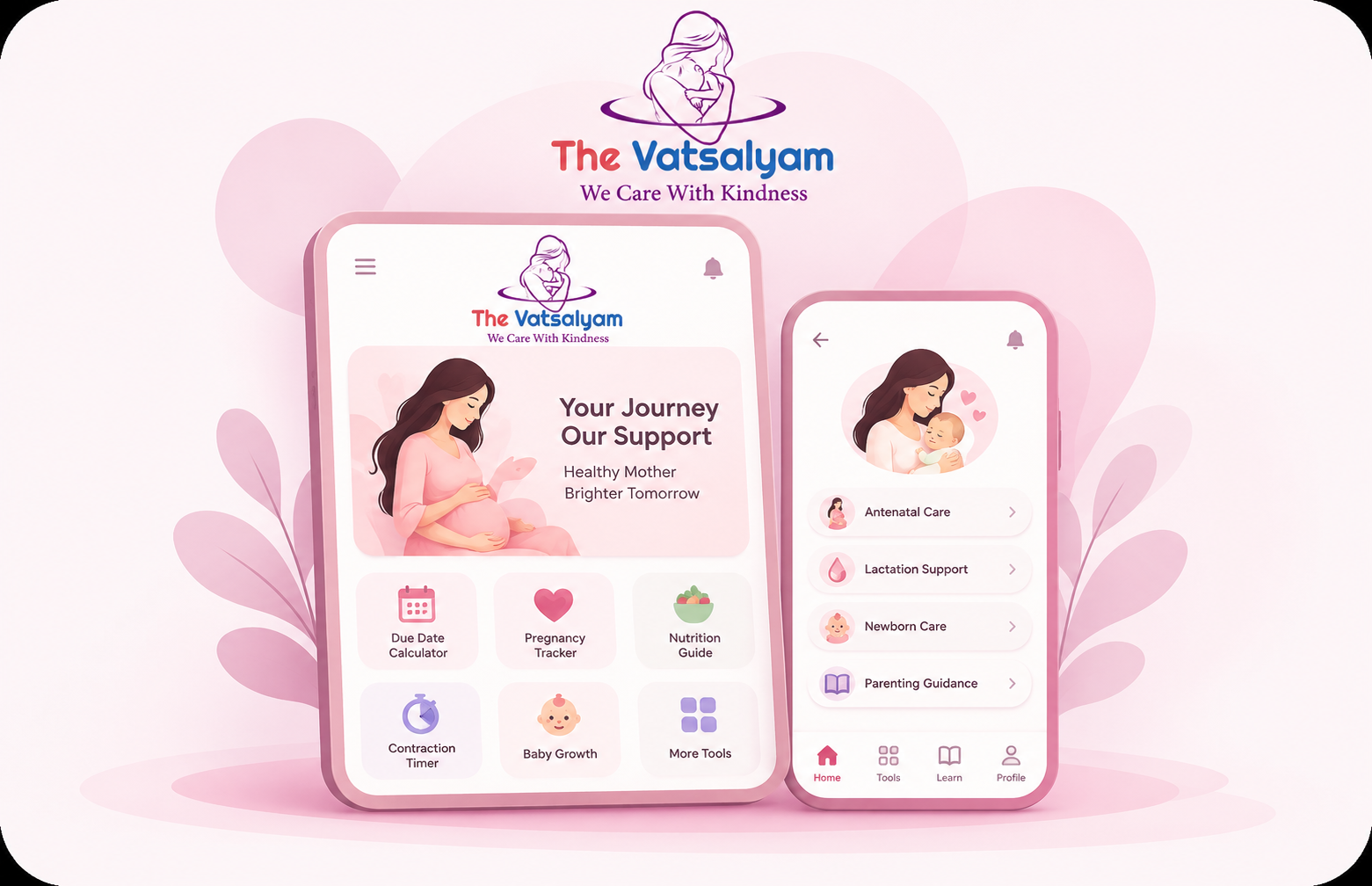
Illustrated preview of The Vatsalyam app for pregnancy education and tracking
THE VATSALYAM MOBILE APP

Care and learning in your pocket.

Pregnancy tools, health tracking and trusted maternal health education — all in one place.

The Vatsalyam · We Care With Kindness

Join our community

Get thoughtful updates about pregnancy, nutrition, breastfeeding and newborn care.

By subscribing, you agree to receive updates from The Vatsalyam. You can unsubscribe any time.